
Damage Restoration in Rockville, CT
- Damage Restoration Services Overview
- Common Damage Restoration Issues in Rockville, Connecticut
- Neighborhoods We Serve in Rockville
- Seasonal Damage Patterns in Rockville
- Housing Characteristics & Restoration Considerations
- Environmental Conditions & Damage Implications
- Advanced Drying and Remediation Technology for Rockville's Historic Buildings
Damage Restoration Services Overview
Water spreads through drywall, subfloor, and framing within minutes - and mold colonies can begin forming in a day or two under the right conditions. That timeline is why Rockville property owners need trained restoration crews on site fast, not days later.
Our teams respond around the clock across Rockville and greater Vernon with equipment and certifications matched to each type of loss:
- Water Damage Restoration - extraction, structural drying, moisture mapping, and documentation for insurance claims after burst pipes, supply line failures, appliance leaks, and roof intrusion.
- Flooded Basement Cleanup - pump-out, saturated material removal, and dehumidification for the deep, stone-and-block cellars common in Rockville's older housing stock.
- Sewage Cleanup - containment, removal of contaminated porous materials, and antimicrobial treatment after backups from municipal mains or private laterals.
- Fire Damage Restoration - board-up, debris removal, soot cleaning, and coordination of structural repairs.
- Smoke Damage Restoration - HVAC and duct cleaning, contents cleaning, and odor neutralization after puff backs and kitchen fires.
- Mold Removal - containment barriers, negative air machines, HEPA filtration, and moisture-source correction so growth does not return.
Benefits for local homeowners and business owners include reduced secondary damage, salvaged contents, healthier indoor air, and clear photo and moisture documentation that supports the claims process from the first hour forward.
Common Damage Restoration Issues in Rockville, Connecticut
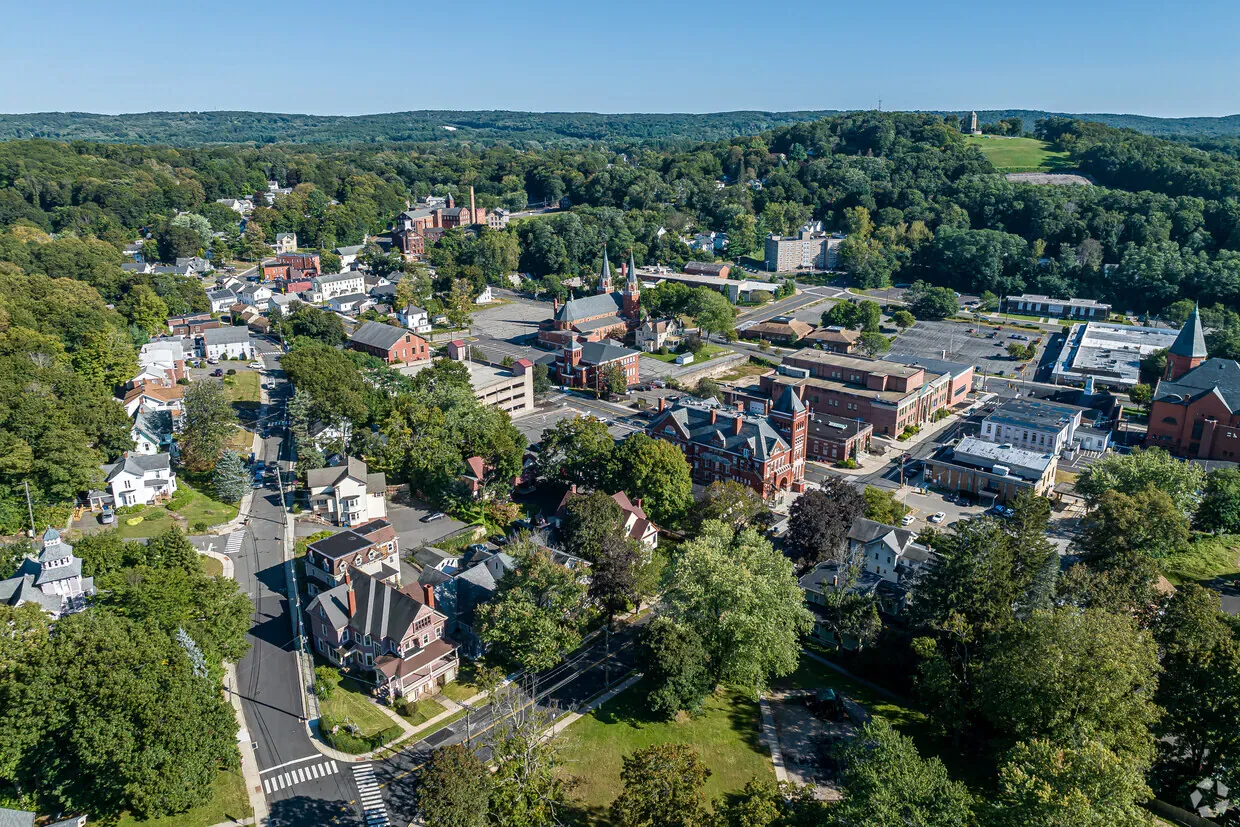
Rockville's mill-village geography drives most of the losses we see - steep grades feeding the Hockanum River valley, dense 19th-century construction, and aging underground infrastructure below tightly packed streets.
Water and Flooding Triggers
- Hydrostatic pressure pushing groundwater through fieldstone foundations and floor-wall joints after heavy rain
- Frozen and burst supply lines in uninsulated crawlspaces, attics, and exterior walls of older duplexes
- Failed sump pumps during multi-day rain events and rapid snowmelt
- Roof and gutter overflow on steep Victorian rooflines with clogged valleys
- Water heater and washing machine hose failures on upper floors of converted multifamily buildings
Sewage and Sanitary Concerns
- Backups where old clay laterals meet tree roots along mature street plantings
- Combined stormwater surcharge sending gray and black water into floor drains
- Septic saturation on outlying properties toward Vernon Center and Ellington lines
Fire, Smoke, and Mold Warning Signs
- Oily black film on walls and ceilings after an oil furnace puff back - a frequent winter call in Rockville
- Persistent smoke odor that intensifies with humidity, signaling residue inside duct runs and insulation
- Musty odors near basement stairs, cupping hardwood, blistering paint, or dark staining behind baseboards
- Recurring allergy symptoms that improve when occupants leave the building
Any of these signs warrants moisture testing before cosmetic repairs begin.
Neighborhoods We Serve in Rockville
Crews cover the full Rockville section of Vernon and the surrounding Tolland County communities, including:
- Downtown Rockville and the Talcott Avenue mill district
- Union Street, Prospect Street, and the historic hillside district
- The Snipsic Lake and Lake Street area
- Vernon Center, Dobsonville, and Talcottville
- Neighborhoods along Hartford Turnpike, West Road, and Grove Street
- Residential streets bordering Valley Falls Park and Henry Park
We also respond to nearby Tolland, Ellington, Bolton, Coventry, Manchester, South Windsor, and Stafford. Familiarity with local street layouts, I-84 access points, and building department expectations helps our trucks arrive quickly and keeps permitting and documentation moving without delays for both residential and commercial properties.
Seasonal Damage Patterns in Rockville
Damage in this part of Connecticut follows a predictable annual rhythm, and knowing the pattern helps property owners prepare.
- December through February - frozen and burst pipes, ice dam leaks along eaves, chimney and heating equipment fires, and oil furnace puff backs producing widespread smoke residue.
- March and April - snowmelt combined with spring rain saturates soil, driving flooded basements, sump pump failures, and sewer surcharge events.
- May and June - rising humidity activates mold in basements and crawlspaces that stayed damp through spring.
- July and August - thunderstorms, wind-driven rain, and tropical remnants cause roof leaks and flash flooding; air conditioning condensate lines clog and leak into ceilings.
- September and October - hurricane season remnants bring the year's heaviest single-day rainfall; early heating season restarts trigger dust and smoke odor complaints.
- November - clogged gutters from leaf fall push water against foundations before the first hard freeze.
Mold remediation calls follow water events by roughly two to six weeks, which is why post-loss moisture verification matters as much as the initial dry-out.
Housing Characteristics & Restoration Considerations
Rockville holds one of the densest concentrations of 19th-century mill-era housing in the region, and that architecture directly shapes restoration strategy.
Common Construction Types
- Victorian and Queen Anne single-family homes with plaster-on-lath walls and balloon framing
- Two- and three-family mill worker tenements, many later converted to condominiums or rentals
- Converted mill buildings with brick masonry, timber posts, and open-plan lofts
- Mid-century capes and ranches on the outskirts toward Vernon Center
- Newer subdivisions and townhomes built with dimensional lumber and poured concrete foundations
How Age Affects the Work
- Balloon framing creates open wall cavities that carry both water and smoke vertically between floors, requiring cavity drying and inspection well above the visible damage line.
- Fieldstone and rubble foundations hold moisture and resist conventional drying, so we use specialty desiccants and targeted airflow.
- Horsehair plaster can often be dried in place rather than demolished when treated quickly.
- Knob-and-tube remnants and older wiring demand electrical isolation before extraction equipment is deployed.
- Layered flooring - linoleum over hardwood over subfloor - traps moisture and needs layer-by-layer meter readings.
- Older insulation and finishes may require asbestos or lead assessment before demolition proceeds.
Multifamily buildings add a coordination layer, since a single upper-unit failure often affects three or four separate households and requires simultaneous drying across units.
Environmental Conditions & Damage Implications
Rockville sits in a humid continental climate with roughly 48 inches of annual precipitation, cold winters, and muggy summers - conditions that favor both freeze-related water losses and warm-season mold growth.
Climate and Moisture
- Summer dew points regularly climb into the 60s, pushing basement relative humidity past the 60 percent threshold where mold thrives
- Winter temperatures well below freezing stress plumbing in uninsulated exterior walls
- Freeze-thaw cycling widens mortar joints and foundation cracks each spring
Terrain, Soil, and Water
- Glacial till and rocky, clay-influenced soils drain slowly, holding water against foundation walls
- Hillside lots above the Hockanum River valley channel runoff toward downhill properties
- Proximity to Snipsic Lake and the river corridor keeps groundwater tables high in low-lying areas
- Bedrock close to the surface in places forces water laterally rather than downward
Indoor Air Implications
- Tight winter envelopes concentrate smoke particulate and mold spores when ventilation is limited
- Older oil-fired heating systems distribute soot through duct runs during malfunctions
- Hard water and mineral scale contribute to premature failure of water heaters and supply fittings
Our approach accounts for all of it - drying plans built around actual psychrometric readings, containment during mold and sewage work, and HEPA air scrubbing to protect occupants throughout the project.
Advanced Drying and Remediation Technology for Rockville's Historic Buildings
Saving original material is the goal in a village full of 100-year-old plaster, chestnut trim, and heart pine flooring - and modern equipment makes that possible far more often than demolition-first approaches of the past.
Diagnostic Tools We Deploy
- Thermal imaging cameras that reveal moisture migration behind plaster without opening walls
- Penetrating and non-penetrating moisture meters calibrated for wood, masonry, and gypsum
- Thermo-hygrometers tracking grain-depth readings to confirm drying progress daily
- Borescopes for inspecting closed wall cavities and duct interiors
- Air and surface sampling for mold, with results interpreted against outdoor baselines
Equipment and Methods
- Truck-mounted and portable extraction units that remove standing water from flooded basements before drying begins
- Low-grain refrigerant and desiccant dehumidifiers sized to the cubic footage of each affected area
- Injectidry systems that force airflow into wall cavities, under hardwood, and beneath cabinetry
- Negative air machines with HEPA filtration and sealed containment for mold and sewage projects
- Hydroxyl generators, thermal fogging, and ozone treatment for smoke odor bound into porous surfaces
- Ultrasonic cleaning for contents, documents, and salvageable household items
How a Project Typically Moves Forward
- Emergency response, safety assessment, and source control
- Extraction, containment setup, and removal of unsalvageable porous materials
- Antimicrobial application and structural drying with daily moisture logging
- Odor neutralization, duct cleaning, and contents restoration as needed
- Post-remediation verification, then reconstruction of finishes to match the original character
IICRC-trained technicians follow industry standards at each stage, and every reading, photo, and material decision is documented for your insurance carrier.





