
Damage Restoration in Dover, NH
- Damage Restoration Services Overview
- Common Damage Restoration Issues in Dover, New Hampshire
- Neighborhoods We Serve in Dover
- Seasonal Damage Patterns in Dover
- Housing Characteristics & Restoration Considerations
- Environmental Conditions & Damage Implications
- Working With Your New Hampshire Insurance Policy After a Loss
Damage Restoration Services Overview
What would you do if you walked down your basement stairs on a March morning and stepped into three inches of cold water? In Dover, that scenario plays out more often than most homeowners expect - and how quickly you respond shapes everything that follows.
Restoration work covers a wide range of emergencies, and each one demands different equipment, training, and sequencing. The services most requested across Strafford County include:
- Water Damage Restoration - extraction, structural drying, moisture mapping, and repair of affected building materials
- Flooded Basement cleanup - pumping standing water, drying foundation walls and slabs, salvaging stored belongings
- Sewage Cleanup - removal of contaminated water and porous materials, followed by antimicrobial treatment and disinfection
- Fire Damage Restoration - debris removal, structural stabilization, soot cleaning, and rebuilding of damaged areas
- Smoke Damage Restoration - odor neutralization, HVAC cleaning, and treatment of surfaces that absorbed smoke residue
- Mold Removal - containment, air filtration, removal of colonized materials, and correcting the moisture source
The benefits for Dover property owners are straightforward: less structural loss, fewer secondary problems like mold behind walls, faster reoccupancy of homes and businesses, and better documentation when an insurance claim goes forward.
Common Damage Restoration Issues in Dover, New Hampshire
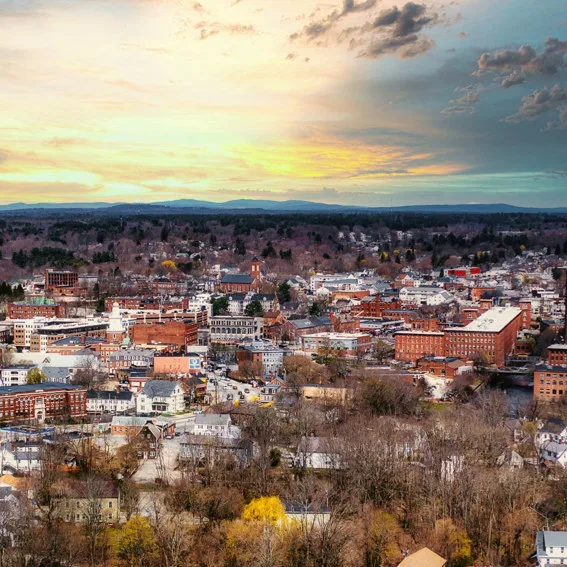
Dover sits along the Cocheco River near its confluence with the Salmon Falls, and that geography drives much of the local damage pattern. Add coastal storm systems rolling in from the Atlantic and a long freeze-thaw season, and the causes stack up quickly.
Frequent Causes of Damage Locally
- Ice dams on older rooflines pushing meltwater under shingles and into ceilings
- Frozen and burst supply lines in uninsulated crawl spaces and exterior walls
- Groundwater rising against fieldstone and poured foundations during spring melt
- Sump pump failure or power loss during nor'easters
- Sewer backups when heavy rain overwhelms municipal lines and older laterals
- Kitchen and chimney fires during heating season, especially in homes with wood stoves
- Slow supply-line leaks behind dishwashers, refrigerators, and washing machines
Warning Signs Worth Acting On
- A musty, earthy smell in a basement or closed room that returns after airing out
- Staining, bubbling paint, or seams opening on drywall and ceilings
- Cupped or lifting hardwood, or floor tile that sounds hollow underfoot
- Efflorescence - white mineral crust - on concrete foundation walls
- Gurgling drains or slow floor drains, which often precede a sewage backup
- Lingering smoke odor that intensifies on humid days, indicating residue still in the structure
- Visible growth on framing, insulation paper, or the back of stored cardboard
Catching any of these early usually means drying rather than demolition.
Neighborhoods We Serve in Dover
Coverage extends across the full city and the surrounding Seacoast communities, including:
- Downtown Dover and the Central Avenue corridor, including mill-era commercial buildings
- Garrison Hill and the surrounding older residential streets
- Sawyer Mill and the Cocheco riverfront district
- Dover Point and the Little Bay shoreline neighborhoods
- Back River Road, Tolend, and the western rural sections
- Blackwater and the Route 9 corridor
- Neighborhoods near Dover High School and Woodman Park
Service also reaches nearby towns across the region - Somersworth, Rollinsford, Madbury, Barrington, Lee, Durham, Rochester, Stratham, Exeter, Newmarket, Raymond, Deerfield, Atkinson, and Plaistow. Both single-family homes and commercial properties are covered, from small storefronts to multi-tenant buildings where limiting downtime matters as much as the repair itself.
Seasonal Damage Patterns in Dover
Damage in the Seacoast follows a fairly predictable annual rhythm. Knowing what season brings helps you prepare before the call becomes an emergency.
- December through February - Frozen pipe bursts, ice dam leaks into upper ceilings, and heating-related fires from wood stoves, chimneys, and space heaters. Smoke damage claims peak alongside them.
- March and April - Snowmelt combined with saturated ground produces the heaviest volume of flooded basements and foundation seepage. Sump pumps run continuously and often fail.
- May and June - Mold becomes visible from winter and spring moisture that was never fully dried. Warming temperatures activate dormant growth in basements and wall cavities.
- July and August - High humidity off the bay drives condensation problems, damp crawl spaces, and mold in finished basements. Thunderstorms bring localized sewage backups.
- September through November - Nor'easters and remnant tropical systems deliver wind-driven rain, roof leaks, and power outages that disable sump pumps. Heating equipment restarts introduce fire risk.
Housing Characteristics & Restoration Considerations
Dover is one of New Hampshire's oldest settlements, and the housing stock reflects centuries of building practice layered on top of each other. That variety changes how restoration is approached from one street to the next.
Common Construction Types
- Pre-1900 colonials and Victorians - fieldstone or rubble foundations, balloon framing, plaster over wood lath, and dirt-floor cellars that hold moisture
- Mill-era workers' housing and converted mill buildings - heavy timber, brick masonry, and shared walls that let smoke and water travel between units
- Mid-century capes and ranches - poured concrete basements, original cast iron waste lines, and limited insulation
- Recent subdivisions and condominiums - finished basements, engineered flooring, and tighter envelopes that trap humidity
How That Affects the Work
- Balloon framing gives fire and smoke a vertical path from basement to attic, so inspection has to extend well beyond the visible burn area
- Plaster and lath dry slowly and often need cavity drying with injection systems rather than surface fans
- Fieldstone foundations wick groundwater continuously, making flooded basement work as much about drainage correction as extraction
- Aging cast iron laterals crack and root-intrude, a leading cause of sewage backups in older neighborhoods
- Finished basements with carpet pad and paper-faced drywall support mold growth within days of a water event
- Knob-and-tube or updated-in-place wiring requires careful power isolation before extraction equipment goes in
Environmental Conditions & Damage Implications
Dover's climate and ground conditions create a demanding environment for building materials. Restoration planning has to account for both.
Climate Factors
- Roughly 45 inches of annual precipitation plus 50 to 60 inches of snow, distributed across all four seasons
- Summer dew points frequently in the upper 60s, pushing indoor relative humidity above the range where mold stays dormant
- Dozens of freeze-thaw cycles each winter that open cracks in masonry, mortar joints, and foundation walls
- Coastal proximity bringing salt-laden air and wind-driven rain from Atlantic storm tracks
Ground and Water Conditions
- Glacial till and marine clay soils across much of the city drain slowly and hold water against foundations
- Seasonally high water tables in low-lying areas near the Cocheco, Bellamy, and Salmon Falls rivers
- Tidal influence at Dover Point that can slow stormwater discharge during high water
- Many outlying properties on private wells and septic systems, where a saturated leach field can back up into the home
Why It Matters for Restoration
Drying targets have to be set against local conditions, not generic numbers. Dehumidification runs longer in Seacoast summers because outside air offers no drying help. Mold remediation that does not correct grading, gutter discharge, or foundation drainage will fail within a season. And smoke odor tends to reactivate on humid days, which is why thermal fogging and sealing are used after cleaning rather than instead of it.
Working With Your New Hampshire Insurance Policy After a Loss
Most Dover property owners have never filed a large property claim before, and the process moves fast at exactly the moment you feel least prepared. Understanding the sequence removes a lot of the pressure.
What Typically Happens, Step by Step
- Stop the source. Shut off water at the main, cut power to affected circuits if safe, and leave the structure if fire or sewage has compromised it.
- Call for emergency response. Extraction and stabilization begin before an adjuster ever arrives - policies require you to prevent further damage.
- Document everything. Photos and video of standing water, damaged contents, and affected rooms before anything is moved.
- Notify your carrier. Report the loss, get a claim number, and ask what your policy covers for water backup, mold, and additional living expenses.
- Moisture mapping and scope. Readings are recorded room by room, creating the record that supports the scope of work.
- Drying and monitoring. Daily logs of temperature, humidity, and material moisture demonstrate progress to the adjuster.
- Reconstruction. Drywall, trim, flooring, and paint restore the space once dry standards are met.
Coverage Details Dover Homeowners Often Overlook
- Sewer and drain backup is frequently a separate endorsement, not part of standard coverage
- Flooding from surface water or river overflow generally requires a separate NFIP policy - relevant near the Cocheco and Bellamy
- Mold coverage is often capped at a set limit, which makes fast drying financially meaningful
- Gradual leaks may be excluded, while sudden and accidental discharge is usually covered
- Smoke odor remediation and contents cleaning are typically covered but need itemized documentation
Local Resources
- Dover Building Department, 288 Central Ave., Dover, NH 03820 - permits for structural and electrical repairs
- New Hampshire Division of Public Health Services, 29 Hazen Drive, Concord - guidance on mold and sewage exposure
- U.S. EPA Region 1 (New England), Boston - indoor air quality and remediation standards





