
Damage Restoration in Box Elder, SD
- Damage Restoration Services Overview
- Common Damage Restoration Issues in Box Elder, South Dakota
- Neighborhoods We Serve in Box Elder
- Seasonal Damage Patterns in Box Elder
- Housing Characteristics & Restoration Considerations
- Environmental Conditions & Damage Implications
- What to Do in the First Hours After Water, Fire or Sewage Damage in Box Elder
Damage Restoration Services Overview
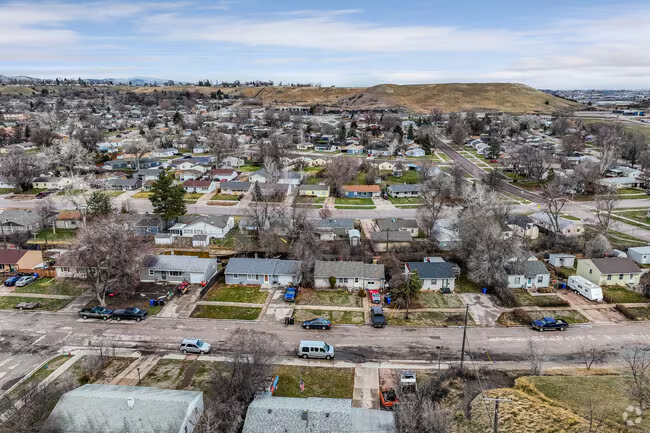
You come home from a weekend in the Black Hills, open the basement door, and hear water running where no water should be. A supply line let go sometime Saturday, and now the carpet squishes underfoot. Situations like this move fast in Box Elder - and so should the response.
Restoration work in this part of Pennington and Meade County covers a wide range of emergencies, and most properties eventually face at least one of them:
- Water damage restoration - burst supply lines, failed water heaters, roof leaks, appliance overflows and ice dam seepage
- Flooded basement cleanup - sump pump failures, saturated soil after heavy rain, and snowmelt pushing against foundation walls
- Sewage cleanup - main line backups and septic overflows that require containment and disinfection, not just extraction
- Fire damage restoration - structural cleaning, debris removal, board-up and content recovery after kitchen, chimney or electrical fires
- Smoke damage restoration - soot removal from walls, ductwork and belongings, plus odor neutralization that lasts
- Mold removal - containment, HEPA filtration and removal of affected materials in crawl spaces, basements and behind finished walls
The benefit of addressing these quickly is straightforward: less demolition, fewer replaced materials, better indoor air quality, and cleaner documentation for your insurance claim.
Common Damage Restoration Issues in Box Elder, South Dakota
Box Elder sits on the eastern edge of the Black Hills foothills, where prairie weather swings hard and fast. That climate drives most local restoration calls.
What Causes Damage Here
- Freeze-thaw cycles - temperatures can drop 40 degrees in a day, stressing pipes in uninsulated crawl spaces and exterior walls
- Heavy spring rain on saturated or frozen soil - runoff has nowhere to go except toward foundations and window wells
- Hail and wind events - damaged shingles and siding let water into attics and wall cavities, sometimes unnoticed for weeks
- Sump pump failure during storms - power outages and heavy inflow overwhelm older or undersized pumps
- Sewer backups - grease, root intrusion and surcharged mains push wastewater into floor drains
- Grass and wildfire smoke - dry, windy stretches carry smoke and fine ash into homes near open prairie
Warning Signs Worth Acting On
- Musty odor in a basement or near a crawl space hatch, even when floors look dry
- Tape seams lifting or nail pops appearing along drywall near the floor line
- Cold, damp spots on carpet padding or discolored baseboard trim
- Slow floor drains, gurgling toilets, or sewer odor after heavy rain
- Yellow-brown ceiling rings that reappear after painting over them
- Persistent smoke odor that returns when the furnace or air conditioner cycles on
- Allergy symptoms that improve when you leave the house
Any of these deserves a moisture reading before finishes are replaced. Painting over the symptom leaves the source in place.
Neighborhoods We Serve in Box Elder
Crews cover Box Elder city limits and the surrounding communities that share the same weather patterns and infrastructure.
- Central Box Elder - older housing stock along Ellsworth Road and the Highway 14/16 corridor
- Ellsworth Air Force Base housing and adjacent rental neighborhoods
- Douglas School District area - Patriot, Vandenberg and nearby residential streets
- Liberty Center and newer subdivisions off Radar Hill Road
- Rural acreages north and east toward Meade County with private wells and septic systems
- Neighboring communities - Rapid City, Rapid Valley, Black Hawk, Piedmont, Summerset, Sturgis and New Underwood
Larger losses sometimes require additional equipment and manpower, and crews can be pulled from across Eastern, Central and Western South Dakota when a storm affects an entire neighborhood at once.
Seasonal Damage Patterns in Box Elder
Restoration calls follow a predictable rhythm in western South Dakota.
- December through February: Frozen and burst pipes lead the list. Crawl space plumbing, hose bibs and vacant properties are the usual victims. Furnace, fireplace and space heater fires also peak, bringing smoke damage that spreads through ductwork.
- March and April: Snowmelt over still-frozen ground sends water into basements and window wells. Sump pumps run constantly, and failures become common. Ice dam damage from winter starts showing on ceilings.
- May through July: Thunderstorm season. Heavy downpours, hail-damaged roofs, flash flooding and sewer surcharges drive flooded basement and sewage cleanup calls. Lightning strikes cause a share of house fires.
- July and August: Humidity plus air conditioning creates condensation issues. Mold growth accelerates in basements and behind vinyl wallcoverings. Grass fire smoke can infiltrate homes near open land.
- September and October: Ideal window for mold remediation, foundation drainage work and moisture inspections before winter.
- November: First hard freezes catch unwinterized outdoor plumbing and irrigation lines.
Housing Characteristics & Restoration Considerations
Box Elder's housing mix ranges from mid-century homes built during Ellsworth's expansion to subdivisions completed in the last decade. Each era brings its own restoration challenges.
Common Construction Types
- 1950s-1970s ranch homes: Poured or block foundations, limited perimeter drainage, cast iron or clay sewer laterals prone to root intrusion and backups
- Split-level and bi-level homes: Finished lower levels with carpet and paneling that trap moisture against foundation walls
- Manufactured and modular housing: Skirted crawl spaces, belly wrap that holds water after a plumbing leak, and limited access for drying equipment
- Newer builds (2005-present): Tighter envelopes and engineered materials that hold moisture longer once wet, plus OSB subfloors that swell quickly
- Rural acreage homes: Private wells, septic systems and propane appliances - all factors in both sewage cleanup and fire response
How This Shapes the Work
- Older homes often need foundation and drainage attention alongside drying - helical piers, waterproofing and sump improvements address repeat flooding
- Finished basements require selective removal of carpet pad, base trim and lower drywall so cavities can dry properly
- Homes with knob-and-tube or aging wiring get careful electrical assessment after any fire or water event
- Textured ceilings and older insulation may require testing before demolition begins
- Tight modern homes need controlled dehumidification rather than open windows, since outdoor air here swings between very dry and very humid
Environmental Conditions & Damage Implications
Local climate and ground conditions influence how damage develops and how drying is approached.
Climate Factors
- Semi-arid climate with roughly 16-18 inches of annual precipitation, much of it arriving in short, intense spring and summer storms
- Wide daily temperature swings that drive condensation inside wall cavities and attics
- Chinook winds that cause rapid midwinter thaws, releasing snowmelt against foundations before the ground can absorb it
- Low winter humidity that helps drying but also masks hidden moisture behind finished surfaces
Soil and Water Conditions
- Clay-heavy prairie soils expand when wet and shrink when dry, stressing foundation walls and opening entry points for water
- Poor percolation means surface water pools near structures rather than draining away
- Hard water shortens the life of water heaters and supply fittings, a frequent source of sudden indoor flooding
- Shallow groundwater in low-lying areas keeps hydrostatic pressure on basement slabs and footings
Air Quality Effects
- Regional wildfire smoke settles fine particulate into attics, ducts and soft furnishings, compounding any existing smoke damage
- Prairie dust and pollen collect in HVAC systems, feeding mold growth once moisture is introduced
- Sealed winter homes concentrate soot and odor from heating appliances, making post-fire deodorization a whole-house task
What to Do in the First Hours After Water, Fire or Sewage Damage in Box Elder
The choices made before a crew arrives often determine how much of your home is saved. A quick phone call can get you practical guidance while help is on the way.
Immediate Steps for Water and Flooded Basements
- Shut off the water at the main valve if the source is plumbing related
- Cut power to affected areas at the breaker panel - never wade into standing water near energized outlets
- Move furniture, boxes and electronics to a dry level, or place foil under furniture legs
- Pull up loose area rugs before dyes bleed into flooring
- Photograph everything before moving or removing items, for your claim file
- Leave saturated drywall and insulation in place until moisture readings are taken
Sewage Backups Are Different
- Treat all sewage water as contaminated - keep children and pets completely away
- Stop using sinks, showers, toilets and washing machines until the line is cleared
- Do not attempt DIY extraction with a household shop vacuum
- Expect porous materials such as carpet, pad and lower drywall to be removed rather than cleaned
After a Fire
- Wait for fire department clearance before re-entering, even for a small kitchen fire
- Avoid wiping soot from walls - dry soot smears and drives particles deeper into surfaces
- Shut off the HVAC system so smoke residue stops circulating through ductwork
- Discard food exposed to heat, smoke or firefighting water
- Arrange board-up and roof tarping so weather and wind do not add a water loss on top of the fire loss
From there, the process follows a clear path: inspection and moisture mapping, water extraction or debris removal, controlled drying with air movers and dehumidifiers, antimicrobial treatment where warranted, odor neutralization, and reconstruction of what was removed. Documenting each stage keeps your insurer informed and your household on solid ground.





