
Damage Restoration in Nashua, NH
- Damage Restoration Services Overview
- Common Damage Restoration Issues in Nashua, New Hampshire
- Neighborhoods We Serve in Nashua
- Seasonal Damage Patterns in Nashua
- Housing Characteristics & Restoration Considerations
- Environmental Conditions & Damage Implications
- Insurance Documentation and the Restoration Process in Nashua
Damage Restoration Services Overview
Water spreads through drywall, subfloor, and insulation within hours - and mold colonies can take hold in a day or two. For Nashua homeowners and business owners, the speed of the first response often determines whether a loss stays a cleanup or becomes a rebuild.
Full-service restoration in the Gate City covers a connected set of emergency and remediation work:
- Water Damage Restoration - extraction, structural drying, and moisture mapping after burst pipes, appliance failures, and roof leaks
- Flooded Basement - pump-outs, sump failure response, and drying of foundations, framing, and finished lower levels
- Sewage Cleanup - containment, removal of contaminated porous materials, and antimicrobial treatment of Category 3 losses
- Fire Damage Restoration - board-up, debris removal, soot cleaning, and content pack-out with tear-out and reconstruction as needed
- Smoke Damage Restoration - HEPA filtration, thermal fogging, duct cleaning, and odor neutralization on surfaces smoke reached but flames did not
- Mold Removal - containment barriers, negative air, safe removal, and correction of the moisture source
Benefits Nashua property owners see from professional crews include IICRC-certified technicians, 24-hour emergency mobilization, documentation that supports insurance claims, and restoration back to pre-loss condition rather than patchwork repair.
Common Damage Restoration Issues in Nashua, New Hampshire
Nashua's mix of freeze-thaw winters, clay-heavy soils, and older housing stock creates a predictable set of restoration calls year after year.
Frequent Causes of Loss
- Frozen and burst supply lines in unheated crawl spaces, garages, and exterior walls during January and February cold snaps
- Ice dams on low-slope and older roofs that push meltwater under shingles into ceilings and wall cavities
- Spring snowmelt and Merrimack and Nashua River rises that saturate soil and overwhelm foundation drainage
- Sump pump failures during power outages from nor'easters and summer thunderstorms
- Sewer backups when heavy rain surcharges municipal lines or when older clay laterals crack from root intrusion
- Kitchen and heating-appliance fires, plus chimney and woodstove fires in homes using supplemental heat
- Hidden mold behind bathroom tile, under carpet padding, and inside insulated basement walls
Warning Signs Worth Acting On
- Musty odor in a basement or closet that never fully clears
- Bubbling paint, stained ceiling tiles, or cupping hardwood
- Efflorescence - white powder - on foundation walls
- Soot filming on window glass or a lingering smoky smell weeks after a small fire
- Gurgling floor drains or slow tub drainage during rainstorms
- Allergy symptoms that improve when you leave the house
Neighborhoods We Serve in Nashua
Restoration crews respond across the full city and into surrounding Hillsborough County communities.
- North End - larger older colonials and Victorians with plaster walls and stone foundations
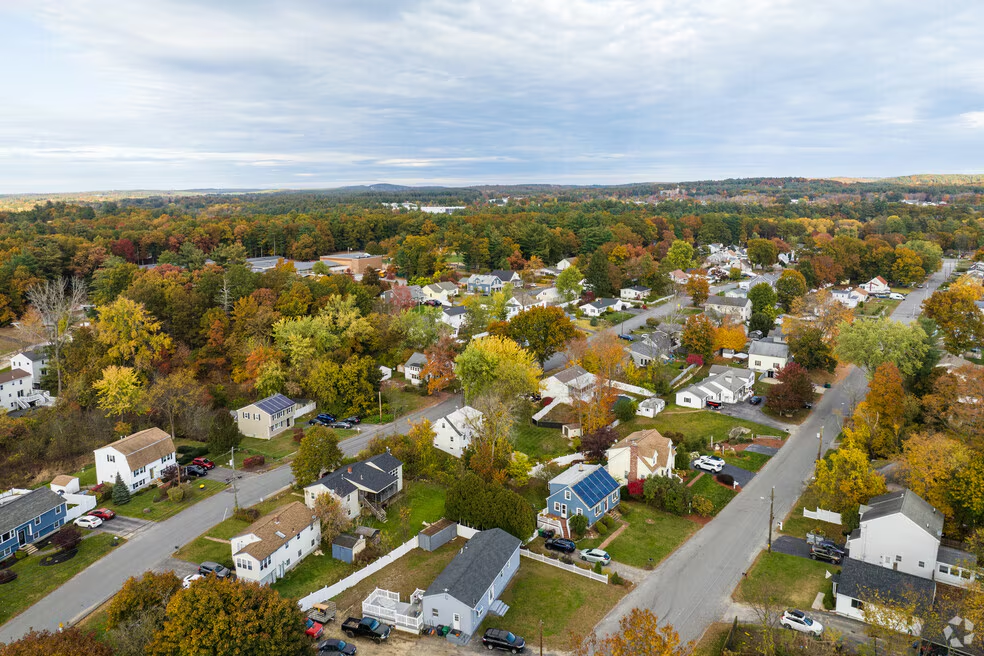
- French Hill and Crown Hill - dense multi-family housing where water losses travel between units
- Downtown and Main Street corridor - mill-era commercial buildings and mixed-use upper floors
- South Nashua and Sunset Heights - post-war and mid-century ranches and capes
- Southwest Nashua and Broad Street Parkway area - newer subdivisions with finished basements
- Millyard and Amherst Street business districts - retail, restaurant, and office restoration
Service also extends to neighboring towns including Hudson, Merrimack, Hollis, Brookline, Litchfield, Amherst, Milford, Londonderry, Bedford, Manchester, Mont Vernon, New Boston, Goffstown, Hooksett, Auburn, Wilton, Greenville, New Ipswich, Temple, Peterborough, Rindge, and Hillsboro.
Seasonal Damage Patterns in Nashua
Each season brings a distinct restoration profile in southern New Hampshire.
- December through February - peak season for frozen pipe bursts, ice dam water intrusion, chimney and space-heater fires, and smoke damage from woodstoves and furnace puffbacks.
- March and April - snowmelt plus rain saturates soil and drives flooded basement calls, sump pump overload, foundation seepage, and sewer backups in older neighborhoods.
- May through August - humidity above 60 percent fuels mold growth in basements and crawl spaces; thunderstorms bring wind-driven rain, roof leaks, and outage-related pump failures. Air conditioning condensate line clogs add slow-leak water damage.
- September and October - nor'easters and remnants of tropical systems produce heavy rainfall and storm flooding; the first furnace startups of the season cause soot and odor events.
- November - holiday cooking fires increase, and early hard freezes catch unwinterized hose bibs and irrigation lines.
Mold remediation follows water events by roughly two to six weeks, which is why spring and late summer are heavy months for testing and removal.
Housing Characteristics & Restoration Considerations
Nashua's housing stock spans well over a century, and each construction era changes the restoration approach.
Common Building Types
- Pre-1940 Victorians, triple-deckers, and mill housing - plaster over wood lath, balloon framing, fieldstone or brick foundations, and knob-and-tube remnants
- 1950s-1970s ranches, capes, and split-levels - poured concrete basements, hardwood over plank subfloor, and original cast iron or galvanized plumbing
- 1980s-2000s colonials - engineered joists, vinyl siding, and finished basements with carpet and framed perimeter walls
- Recent condos and townhomes - shared walls and stacked plumbing that turn one unit's leak into a multi-unit loss
How Age Affects the Work
- Balloon framing lets water and smoke travel vertically from basement to attic, requiring cavity drying and inspection at every floor level
- Plaster holds moisture longer than drywall and needs injection drying or controlled removal rather than fast demolition
- Homes built before 1980 may contain asbestos in floor tile, pipe wrap, and joint compound, plus lead paint - testing precedes any tear-out
- Stone and rubble foundations wick groundwater, so flooded basement work often pairs drying with drainage and vapor-barrier recommendations
- Finished basements hide moisture behind framing and insulation, where mold develops silently
- Older cast iron and clay sewer laterals crack and root-invade, raising sewage cleanup frequency
Environmental Conditions & Damage Implications
Nashua's climate and geology work against dry buildings for much of the year.
Climate Factors
- Roughly 45 inches of annual precipitation plus 50-plus inches of snow, concentrating water loads in spring melt
- Humid summers with dew points regularly in the 60s, pushing basement relative humidity into the mold growth range
- Dozens of freeze-thaw cycles each winter that widen foundation cracks and stress plumbing
- Winter heating that drops indoor humidity and drives smoke odor deep into porous materials and HVAC systems
Soil, Water, and Air
- Glacial till and clay-loam soils drain slowly, holding hydrostatic pressure against basement walls after storms
- High seasonal water tables near the Merrimack and Nashua Rivers and Salmon Brook increase seepage and sump run times
- Radon-prone bedrock means basement sealing and depressurization should be coordinated with restoration work
- Hard, mineral-rich water shortens water heater and supply-line life, a common cause of sudden indoor flooding
- Pollen, wood smoke, and summer ozone reduce indoor air quality, making HEPA filtration and air scrubbing valuable during mold removal and smoke damage restoration
These conditions favor drying plans built around dehumidification capacity and moisture verification rather than simple air movement, plus post-remediation clearance testing on mold and sewage jobs.
Insurance Documentation and the Restoration Process in Nashua
Thorough documentation is what separates a smooth claim from a disputed one - and New Hampshire policies vary widely on flood, sewer backup, and mold coverage.
What a Detailed Restoration Sequence Looks Like
- Emergency contact and mobilization - 24-hour dispatch, safety assessment, and identification of the water category or fire severity
- Source control and stabilization - shutting off water, board-up, roof tarping, and establishing containment for sewage or mold
- Inspection and moisture mapping - thermal imaging, penetrating and non-penetrating meters, and photo documentation of every affected room
- Extraction and removal - truck-mounted extraction, pumping of flooded basements, and controlled removal of unsalvageable porous materials
- Cleaning and treatment - antimicrobial application, soot cleaning by residue type, duct cleaning, and odor neutralization
- Structural drying - air movers and low-grain refrigerant dehumidifiers with daily moisture readings logged until materials hit dry standard
- Verification - post-remediation testing for mold, clearance checks after sewage cleanup, and confirmation of odor elimination
- Reconstruction - drywall, flooring, trim, paint, and content restoration returning the property to pre-loss condition
Documentation That Supports Your Claim
- Time-stamped photos before, during, and after every phase
- Daily drying logs with equipment placement and moisture readings
- Itemized scope written in estimating software adjusters recognize
- Content inventories for pack-out items with condition notes
- Lab results for mold sampling and contamination clearance
Ask whether your policy includes a sewer and drain backup endorsement, since standard homeowners coverage often excludes it - a common surprise for Nashua residents with older laterals and finished lower levels.





