
Damage Restoration in Lake Mohawk, NJ
- Damage Restoration Services Overview
- Common Damage Restoration Issues in Lake Mohawk, New Jersey
- Neighborhoods We Serve in Lake Mohawk
- Seasonal Damage Patterns in Lake Mohawk
- Housing Characteristics & Restoration Considerations
- Environmental Conditions & Damage Implications
- Protecting Lakefront and Historic Homes During Restoration
Damage Restoration Services Overview
Water that sits for a weekend rarely stays a water problem. It becomes swollen subfloors, delaminated hardwood, colonized wall cavities, and eventually a framing and drywall replacement project that costs many times what early mitigation would have.
Lake Mohawk properties sit close to groundwater, surrounded by mature trees and steep grades. That combination turns small failures - a cracked supply line, a backed-up floor drain, a chimney fire - into whole-structure events quickly.
Restoration LLC handles certified water damage restoration in Lake Mohawk, NJ, along with full reconstruction after the drying is finished. General restoration cost estimates range from $1,500-$9,500+ depending on affected square footage, category of water, and structural involvement.
Services Available to Lake Mohawk Property Owners
- Water Damage Restoration - extraction, structural drying, moisture mapping, and documentation for insurance
- Flooded Basement - pump-out, contents handling, sump and drainage evaluation, dehumidification
- Sewage Cleanup - Category 3 containment, removal of porous materials, antimicrobial treatment
- Fire Damage Restoration - board-up, debris removal, structural cleaning, rebuild
- Smoke Damage Restoration - soot removal, thermal fogging, HVAC decontamination, odor neutralization
- Mold Removal - containment barriers, HEPA filtration, affected material removal, clearance testing
Acting within the first day or two typically keeps a claim in mitigation territory rather than full reconstruction.
Common Damage Restoration Issues in Lake Mohawk, New Jersey
Lake Mohawk is a lakefront community in Sparta Township with rocky glacial soils, steep lots, and a housing stock that began as seasonal cottages. Those traits create a predictable set of restoration calls.
Local Causes We See Repeatedly
- Hydrostatic pressure against foundations on downhill lots, forcing water through cold joints and block walls
- Frozen and burst pipes in uninsulated crawl spaces beneath converted summer cottages
- Sump pump failure during power outages caused by tree-fall on overhead lines
- Septic and sewer backups when saturated ground prevents leach field absorption
- Ice damming on low-slope roofs and dormers, pushing meltwater into ceilings and exterior walls
- Chimney and woodstove fires in older masonry flues used heavily through Sussex County winters
Warning Signs Worth Investigating
- Musty odor in a basement or closet that intensifies after rain
- Tide lines, efflorescence, or flaking paint on foundation walls
- Baseboards separating from drywall, or nail pops appearing in ceilings
- Cupping or crowning in hardwood flooring on the lake-facing side of the home
- Smoke odor returning on humid days after a small kitchen or fireplace incident
- Gurgling drains or slow fixtures - often the first hint of a sewage backup
Any of these signs suggests moisture is present somewhere the eye cannot reach, and a meter reading settles the question fast.
Neighborhoods We Serve in Lake Mohawk
Our crews cover the full Lake Mohawk community and the surrounding Sparta and Sussex County areas.
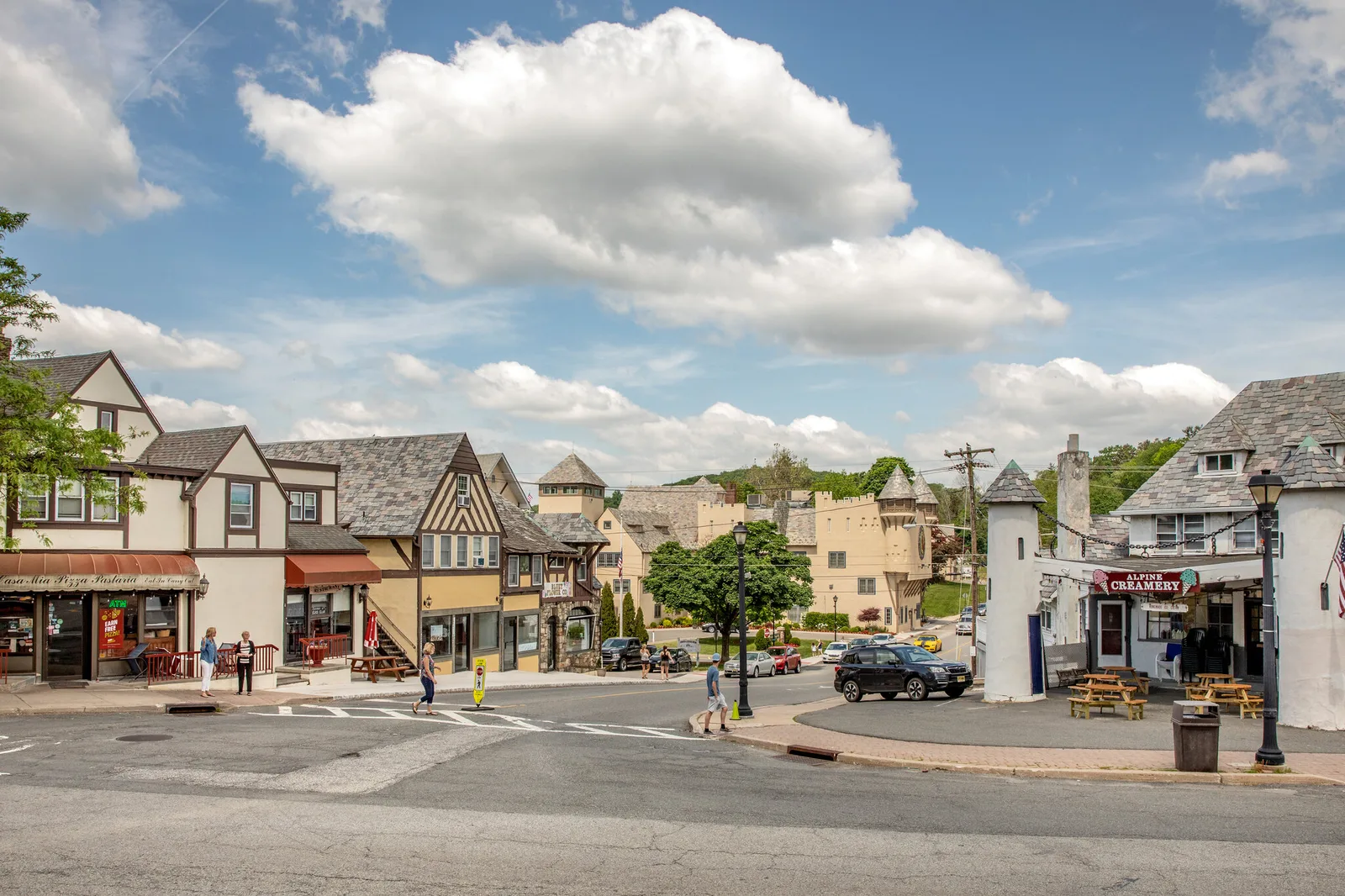
- The Boardwalk and White Deer Plaza - historic Alpine-style commercial and residential structures near the lakefront
- West Shore and East Shore Trails - waterfront homes with walkout basements and boathouses
- The Bluffs and Upper Mohawk - hillside properties with retaining walls and drainage challenges
- Sparta Village, Glen Road, and Woodport - mixed-era single-family homes
- Lake Mohawk Country Club district - historic structures requiring preservation-minded methods
We also respond throughout Sparta Township, Lake Shawnee, Lake Hopatcong, Byram, Andover, Stanhope, Hopatcong, Franklin, Ogdensburg, and Newton. Experience with the lake communities matters - the construction details, septic arrangements, and seasonal occupancy patterns around these waterbodies differ meaningfully from inland suburban housing.
Seasonal Damage Patterns in Lake Mohawk
Restoration demand here follows a reliable annual rhythm tied to freeze cycles, snowmelt, and humidity.
- December through February - burst pipes in crawl spaces and unheated second homes, ice dam leaks into ceilings, chimney and heating-equipment fires driving fire and smoke damage restoration calls
- March and April - snowmelt combined with spring rain produces the year's heaviest flooded basement volume, plus septic backups when the water table peaks
- May and June - mold removal requests surge as warmth meets moisture left behind from spring flooding
- July and August - thunderstorm downpours overwhelm gutters and sump systems; high dew points fuel condensation-driven mold in basements and crawl spaces
- September and October - tropical remnant storms bring flash flooding and sewage cleanup calls; wind-driven rain finds siding and window failures
- November - first heating season use exposes flue defects and dryer vent hazards, and clogged leaf-filled gutters redirect water toward foundations
Seasonal residents should schedule inspections before closing up in fall and immediately upon reopening in spring.
Housing Characteristics & Restoration Considerations
Lake Mohawk was developed beginning in the late 1920s as a planned lake community, and much of the original housing stock remains in service. Homes here commonly date from the 1930s through the 1970s, with newer infill construction scattered throughout.
Construction Traits That Shape Restoration Work
- Stone and block foundations - porous, prone to seepage, and slow to release moisture during structural drying
- Converted seasonal cottages - shallow crawl spaces, limited insulation, and pipe runs in vulnerable locations
- Alpine and Tudor-influenced exteriors - stucco, half-timbering, and decorative masonry requiring careful, compatible repair rather than generic patching
- Plaster over wood lath - holds water longer than drywall and demands different drying protocols
- Multi-level and walkout basements - built into slopes, so water enters laterally rather than from below
- Knob-and-tube or early wiring remnants - a safety factor after water intrusion and fire events
Preservation-Minded Repair
Historic materials do not tolerate modern shortcuts. The 1930 Lake Mohawk Country Club restoration by ZD Stucco Repair used specialized lime-based materials and historic preservation techniques - the same philosophy applies to any period home in the community.
Modern cement stucco applied over lime-based substrates traps moisture and accelerates deterioration. Restoration LLC evaluates original assemblies before rebuilding, so repairs breathe the way the structure was designed to and mold does not return behind fresh finishes.
Environmental Conditions & Damage Implications
Sussex County sits in northern New Jersey's Highlands, and the local climate and geology directly influence how damage develops.
Climate Factors
- Roughly 45-50 inches of annual precipitation, including substantial winter snowfall
- Summer dew points regularly in the upper 60s, pushing basement relative humidity past mold-growth thresholds
- Repeated freeze-thaw cycles that widen foundation cracks and mortar joints season after season
- Lake-adjacent microclimate producing morning fog and slower surface drying
Soil, Water, and Air
- Glacial till and shallow bedrock - poor percolation means stormwater travels along the surface toward foundations rather than soaking in
- High seasonal water table near the lake, keeping hydrostatic pressure constant against below-grade walls
- Septic systems on many lots - saturated ground reduces leach field capacity and increases backup risk
- Heavy tree canopy - shade slows evaporation, roots invade sewer laterals, and leaf debris clogs drainage
- Wood-burning heat in many homes, contributing to particulate loading and smoke odor persistence indoors
These conditions mean drying targets in Lake Mohawk must account for ambient humidity, not just affected materials. A basement dried to match a humid July outdoor environment will simply reabsorb moisture. Our technicians use dehumidification sized to the actual load and verify results with moisture meters and thermal imaging before closing walls.
Protecting Lakefront and Historic Homes During Restoration
Lakefront and period properties around Lake Mohawk require a different sequence than standard suburban restoration work. The materials are older, the access is tighter, and the community has architectural standards worth respecting.
Our Process for These Properties
- Emergency stabilization - stop the water source, extract standing water, board or tarp openings after fire events
- Assessment and documentation - moisture mapping, thermal imaging, photo records for the insurance carrier
- Containment - negative air machines and poly barriers isolate mold or sewage work zones from clean living space
- Selective demolition - remove only unsalvageable materials, preserving original plaster, trim, and masonry wherever moisture readings allow
- Structural drying - air movers and dehumidifiers positioned for the specific assembly, monitored daily against documented targets
- Cleaning and deodorization - HEPA vacuuming, soot removal, antimicrobial application, HVAC decontamination as required
- Reconstruction - rebuild with compatible materials, including lime-based stucco and plaster on historic substrates
- Verification - final moisture readings and, for mold projects, third-party clearance testing
Standards We Follow
- IICRC S500 for water damage restoration and structural drying
- IICRC S520 for mold remediation containment and clearance
- IICRC S700 for fire and smoke damage cleaning
- Category 3 protocols for all sewage cleanup, including full removal of contaminated porous materials
Restoration LLC combines mitigation and construction under one roof, so drying, remediation, and rebuild follow a single plan instead of three disconnected contractors. For an estimate on water damage restoration, flooded basement response, sewage cleanup, fire or smoke damage restoration, or mold removal in Lake Mohawk, call 973-447-3363.





